Nearly all great ideas follow a similar creative process, and this article explains how this process works. Understanding this is important because creative thinking is one of the most useful skills you can possess. Nearly every problem you face in work and in life can benefit from innovative solutions, lateral thinking, and creative ideas.
Anyone can learn to be creative by using these five steps. That’s not to say being creative is easy. Uncovering your creative genius requires courage and tons of practice. However, this five-step approach should help demystify the creative process and illuminate the path to more innovative thinking.
To explain how this process works, let me tell you a short story.
A Problem in Need of a Creative Solution
In the 1870s, newspapers and printers faced a very specific and very costly problem. Photography was a new and exciting medium at the time. Readers wanted to see more pictures, but nobody could figure out how to print images quickly and cheaply.
For example, if a newspaper wanted to print an image in the 1870s, they had to commission an engraver to etch a copy of the photograph onto a steel plate by hand. These plates were used to press the image onto the page, but they often broke after just a few uses. This process of photoengraving, you can imagine, was remarkably time-consuming and expensive.
The man who invented a solution to this problem was named Frederic Eugene Ives. He went on to become a trailblazer in the field of photography and held over 70 patents by the end of his career. His story of creativity and innovation, which I will share now, is a useful case study for understanding the 5 key steps of the creative process.
Every writer hits a wall now and then. The ideas stop flowing, inspiration runs dry, and the blank page becomes a battlefield.
Creativity isn’t magic, it’s a muscle. With the right steps, you can strengthen it and bring fresh energy to your writing life.
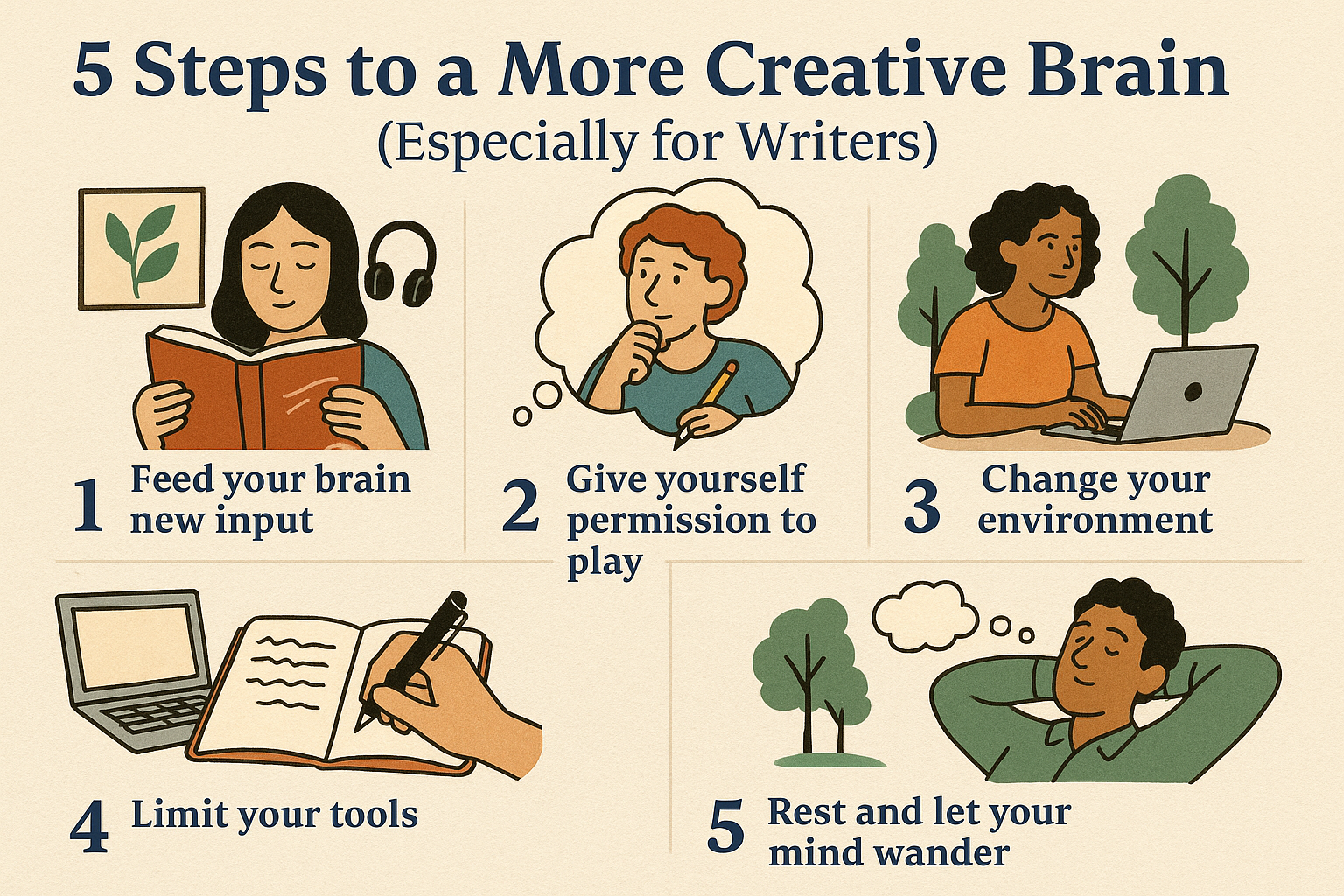
Here are five practical, proven steps to spark your creativity and keep those ideas coming
- Feed Your Brain New Input
Creativity is the remixing of everything you’ve ever absorbed. So if your inspiration feels stale, change what you’re consuming. Read outside your genre. Listen to music without lyrics. Watch foreign films. Go to a museum. New input creates unexpected connections—and that’s the seed of creativity.
Try reading poetry if you usually write fiction. It activates different mental muscles.
- Give Yourself Permission to Play
Perfection kills creativity. When writing, allow yourself to experiment without worrying if it’s “good.” Play with what-ifs, switch points of view, or write a scene from your antagonist’s perspective. Play loosens the mind, encourages risk, and often leads to surprising breakthroughs.
Challenge: Free-write for 10 minutes without editing a single word. Let it be messy.
- Change Your Environment
Your brain forms patterns based on your environment. If you always write at the same desk, under the same lighting, your ideas might get stuck in the same loops. Try writing in a coffee shop, outside, or even standing up. Shifting your surroundings can spark new ways of thinking.
Moving your body inherently connects creativity and physical motion.
- Limit Your Tools
It sounds backward, but too many options can paralyze creativity. Try writing with a pen and notebook instead of a laptop. Or give yourself a single sentence prompt to start a scene. When your brain has to work within limits, it becomes more inventive.
Write a short story using only dialogue—no narration.
- Rest and Let Your Mind Wander
Your brain needs downtime. Some of your most creative moments happen when you’re doing nothing—showering, driving, or walking the dog. Step away from your project. Let your subconscious connect the dots while you rest or daydream.
Creativity often visits when you’re not looking at it.
A more creative brain isn’t about working harder—it’s about working differently. Stay curious, stay playful, and remember that creativity is a process, not a destination. With these steps, you’re not just waiting for inspiration, you’re training your brain to generate it.