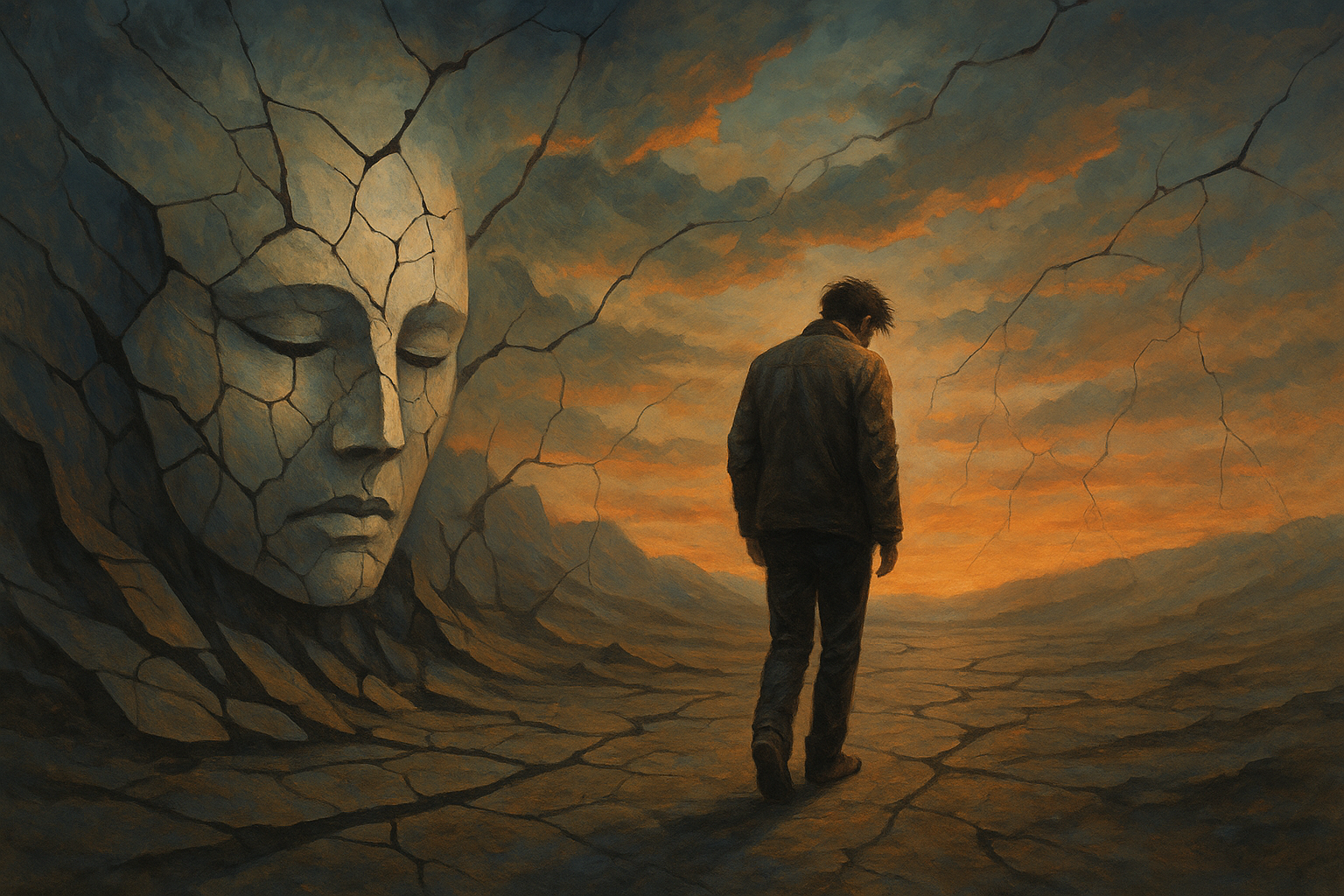
To create conflict, explore your characters’ flaws
No matter what you see on the outside, everyone struggles on the inside, even your fiction characters.
Pain is a universal experience that affects everyone on their journey through life. Some experience more severe damage than others, altering how we perceive ourselves and the world. Sometimes flaws develop as we attempt to defend against further hurts.
Other flaws are the dark side of our positive attributes. Even positive traits like confidence, attractiveness, and success can have downsides. Too much confidence can turn into arrogance, and too much attractiveness can lead to vanity. And for all their charisma, successful people rarely get ahead by being gullible or wishy-washy.
Your fictional character might have gotten rich and famous by being manipulative and ruthless. But those same flaws may be his downfall.
Once you have identified or developed the flaw, you will need to force your character to deal with it.
Have you ever observed a young child who is reluctant to follow instructions? Refusals, arguments, and tantrums mark the child’s power struggle with the adult.
As we get older, we get more subtle. We are stubborn creatures, and we will take extraordinary measures to stay in our old comfort zone. Even when it’s not very comfortable. What that means is that, as Angela and Becca explain in their Building the Characters from the Ground Up section, you must give your character’s real motivation to change their flaws. We change when forced to, not just because of resolutions. A crisis is an opportunity for change, but you need to provide a substantial reason to convince your character that he has no choice but to change.
There is sometimes debate amongst writers about whether to give their character’s mental health conditions such as obsessive-compulsive disorder or paranoia. Because clinical diagnoses highlight the problematic aspects of mental disorders, writers generally avoid assigning specific labels to their characters.
As an example, many people are tidy, and many people like their homes to stay clean. Some of those people are extreme enough that they annoy others and sometimes even themselves. A diagnosis of OCD requires that cleaning consumes the person’s life. Perhaps they’re getting to work two and three hours late because they can’t walk out the door without washing every stitch of fabric in the house. Bedsheets, clothes, curtains, even the carpets.
So, you have a nervous character that struggles with his anxiety but lives a normal life? An anxiety diagnosis may be too extreme, but he is still flawed. Character flaws can be worse than disorders since characters might not even know they have a problem.
Books help us learn more about ourselves and the world
Many believe people read for entertainment and escape, but those aren’t the only reasons. Meaningful books help us learn more about ourselves and the world. And how does this insight come about? Through the point-of-view (POV) character’s own self-awareness, inner transformation, and growth.
Well-created characters can feel so real that when we read about them, it’s like we’re sharing their experiences. We ache when they ache. We want what they want. When they’re torn and conflicted, so are we.
What about complicated, realistic characters that have such a powerful pull? Why does their search for meaning resonate within us as readers? It’s because we’re all on the same search in our own lives. We are all ingrained with the need to understand ourselves. We have desires and needs, fears, and hopes. We have questions about our role in this life, and what we should accomplish. We share the same journey as our characters in seeking answers. The route we follow on this journey is up to our individual personalities. One’s needs, beliefs, morals, and values uniquely attune attitudes, ideas, thoughts, and behaviors. Unlike emotions or moods that come and go, personality traits are consistent and play a big part in determining our actions.
Every character in your novel needs to be unique
Each character must have their own mix of strengths and weaknesses. These traits emerge over time, formed by the character’s experiences, both good and bad. Understanding our characters’ motivations is key to creating them, even if some details don’t make it into the story. Flaws need clear definitions.
We all have a mix of traits that drive our actions and choices. For example, a character who dreams of winning an Olympic gold medal may have traits like determination, a strong work ethic, and perseverance. He’ll train hard, eat right, and perfect his technique to reach his goal, avoiding shortcuts. Strengths like these help characters achieve their desires.
But what role do weaknesses play?
How do we know which traits are positive and which are flaws? A character trait is a quality, attitude, or behavior that shows who someone is. Positive traits help characters succeed and improve through positive actions. They also enhance one’s relationships and benefit other characters. Honorable, for instance, is easy to place on the positive side of the personality wheel. A good person achieves success, helping others and building strong relationships.
Flaws are traits that damage or minimize relationships and do not consider the well-being of others. They also are self-focused rather than other-focused. By this definition, jealous belongs to the flaws. Jealous characters focus on their own wants and insecurities. Neutral traits blend positive and negative aspects, making them difficult to classify.
Many factors, including upbringing, role models, environment, and genetics, determine who our characters become. If the character’s world is anything like ours, it’s filled with flawed people, and life isn’t the perfect, well-balanced nirvana they’d like it to be. Experiences and unhealthy relationships can wound someone.
But the most crippling factor, the one that authors should always strive to unearth from their characters’ past—is emotional trauma.
Old hurts can have a tremendous impact on our characters, influencing their current behavior. Painful events like these are called wounds and are profoundly powerful. She’s so scared by a past event that she avoids anything that might cause similar pain. It colors how she views the world and alters what she believes about herself and others. This traumatic experience instills a deep fear that the hurt will happen again if the character doesn’t protect herself against it.
Physical defects with a lasting psychological effect, such as a crippling illness or disfigurement, can have the same result.
In both cases, the mistaken belief that the character must harden herself to be safe allows negative traits to emerge.
That’s where you’ll find your story.