Understanding Their Strengths and Weaknesses
Writers don’t create all words with the same intent.
Whether you’re crafting a compelling novel, an informative article, or a passionate opinion piece, understanding the five main writing styles can transform the way you communicate.
Each style has its purpose, strengths, and limitations.
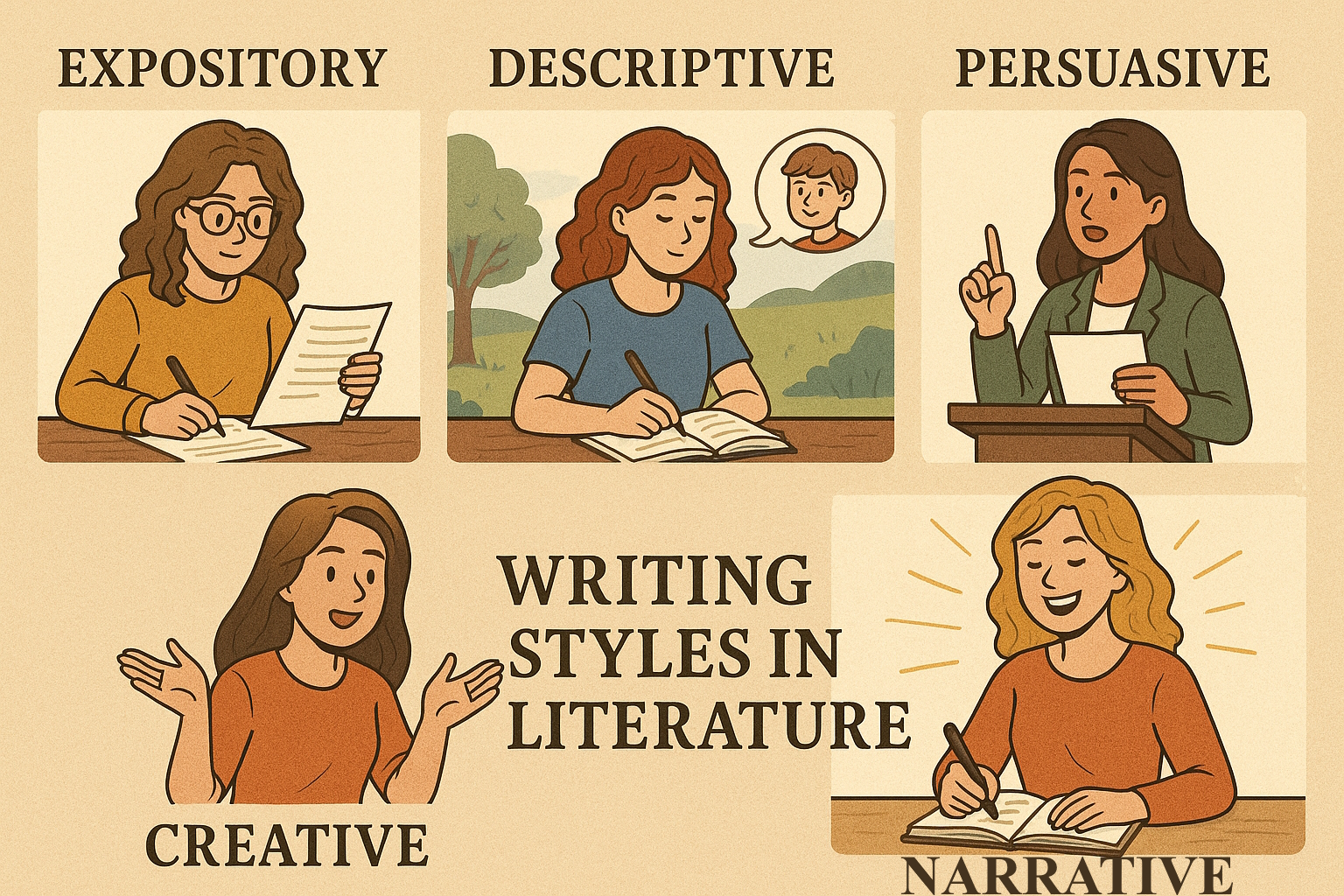
Here’s a breakdown of the five primary writing styles in literature, expository, descriptive, narrative, persuasive, and creative.
Along with the pros and cons of each.
1. Expository Writing
Purpose: To explain, inform, or clarify.
Common Uses: Textbooks, how-to articles, research papers, news reports (excluding opinions), and technical writing.
Key Features:
- Focus on facts and logic
- Objective tone
- Clear organization (headings, bullet points, etc.)
Pros:
- Ideal for conveying information efficiently
- Helps the reader understand complex ideas
- Encourages logical structure and clarity
Cons:
- Can feel dry or impersonal
- Doesn’t engage emotions
- Lacks narrative or descriptive flair
2. Descriptive Writing
Purpose: To paint a vivid picture in the reader’s mind.
Common Uses: Poetry, fiction, journal entries, travel writing, and nature essays.
Key Features:
- Rich sensory details (sight, sound, taste, touch, smell)
- Use of figurative language (metaphors, similes)
- Focus on atmosphere, mood, and imagery
Pros:
- Immerses readers in a scene or moment
- Evokes strong emotional and sensory reactions
- Enhances other styles (e.g., narrative and creative writing)
Cons:
- Risk of over-description or slowing the pace
- May lack direction if not balanced with action or purpose
- Can be vague if not grounded in context
3. Narrative Writing
Purpose: To tell a story or recount events.
Common Uses: Novels, short stories, memoirs, biographies, personal essays.
Key Features:
- Plot, characters, setting, conflict, resolution
- Often written in first or third person
- Includes dialogue and pacing
Pros:
- Engages readers through story and character
- Encourages emotional connection and empathy
- Makes abstract ideas more relatable
Cons:
- Can be time-consuming to structure effectively
- Risks losing focus if the story lacks purpose
- May blur the line between fact and fiction (especially in memoirs)
4. Persuasive Writing
Purpose: To convince the reader of a specific point of view or action.
Common Uses: Editorials, opinion pieces, advertisements, cover letters, speeches.
Key Features:
- Clear position or argument
- Use of evidence, logic, and emotional appeal
- Strong voice and call to action
Pros:
- Influences thinking or behavior
- Sharpens critical thinking and argumentative skills
- Drives engagement and debate
Cons:
- Can come off as biased or manipulative
- May alienate readers who disagree
- Requires strong evidence and structure to be effective
5. Creative Writing
Purpose: To entertain, provoke thought, or explore ideas freely.
Common Uses: Fiction, poetry, plays, screenplays, experimental writing.
Key Features:
- Emphasis on originality, imagination, and voice
- Flexible structure and tone
- Can blend multiple styles (narrative, descriptive, etc.)
Pros:
- Encourages artistic freedom and personal expression
- Invites innovation in language and form
- Captures human experience in unique ways
Cons:
- Can lack clarity or coherence if not well-executed
- May be too abstract for certain audiences
- Risk of being self-indulgent without reader focus
Concluding Thoughts
Each writing style serves a unique purpose, and understanding their differences can help you become a more versatile and effective writer.
Whether you’re explaining a concept, describing a sunset, telling a life story, making an argument, or letting your imagination run wild, mastering these five styles equips you with the tools to write with confidence and intention.
Tip: The best writers know how to blend styles effectively.
Incorporating a narrative anecdote can enhance the persuasiveness of an essay, while providing expository background may enrich a novel. Writers should feel confident in employing and adapting these techniques as appropriate to achieve their objectives.